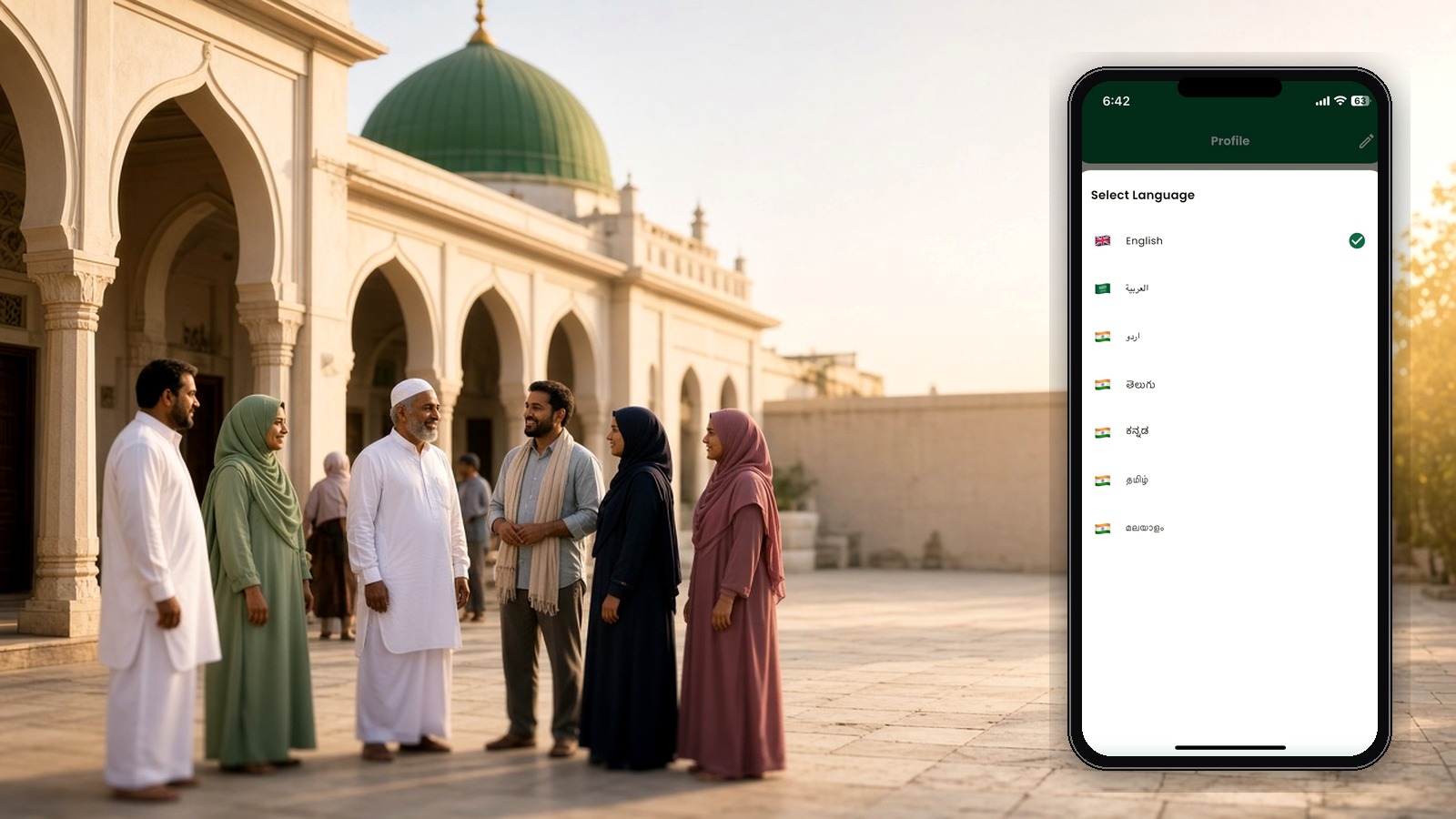
In many South Indian masjids, Friday Khutbah may be in one language, WhatsApp chatter in another, and the prayer app everyone downloaded in a third. That gap is small until an elder hesitates at a screen, a youth translates every notification, or a Mutawalli gives up on tools that only speak English.
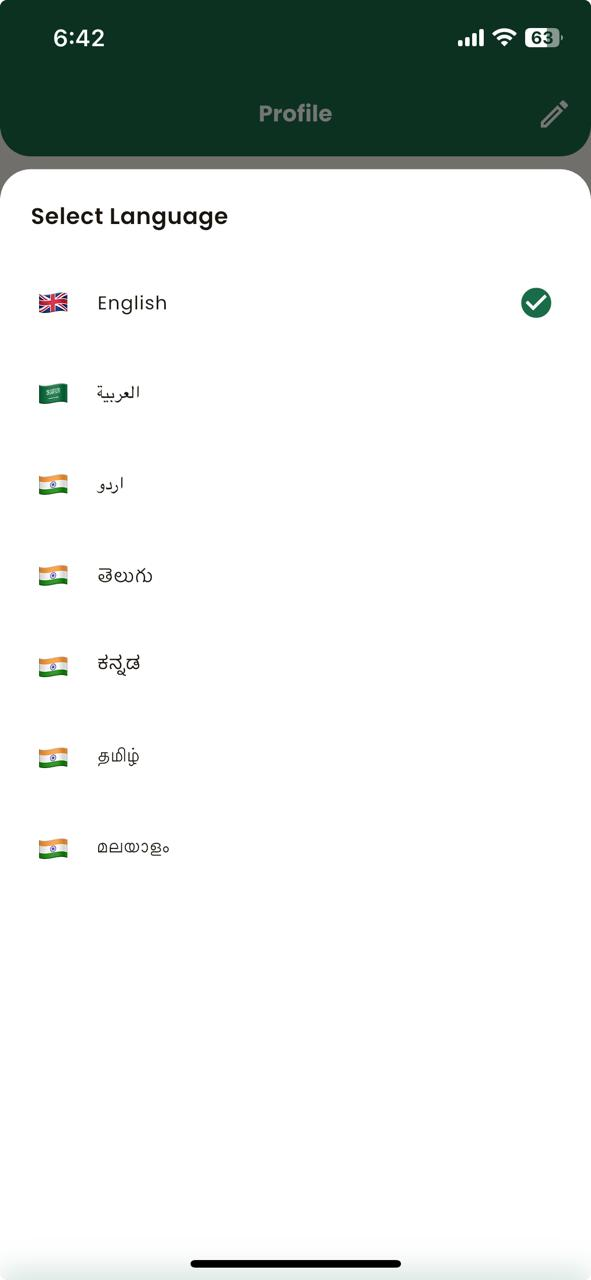
MyAlMasjid ships with seven UI languages: English, Arabic, Urdu, Telugu, Kannada, Tamil, and Malayalam. You pick once in Profile. The same published Adhan and Iqama, the same roles, the same community tools — labels that match how your household already talks.
What "multilingual" means here
This is not a separate app per state. It is one local-masjid product with a language switch. Open Profile, tap Select Language, choose English, العربية, اردو, తెలుగు, ಕನ್ನಡ, தமிழ், or മലയാളം. The preference stays on your device.
Committees still publish one schedule. Members still join one masjid. Language is how each person meets that shared clock — not a second source of truth.
Why South Indian scripts matter for committees
Generic prayer calculators often assume English is enough. For a Bengaluru, Hyderabad, Chennai, or Kochi congregation, that assumption quietly excludes parents and elders who are fluent in Kannada, Telugu, Tamil, or Malayalam every day — and only "okay" in English on a phone.
When the app speaks their language, you spend less time translating buttons and more time on the real work: publishing times, assigning Muezzin and Imam roles, and inviting members. Adoption becomes a family conversation, not a tech tutorial.
Arabic and Urdu stay in the same list
South Indian languages do not replace Arabic or Urdu. Many households move between them. MyAlMasjid keeps العربية and اردو next to Telugu, Kannada, Tamil, and Malayalam so mixed communities are not forced into one identity.
English remains available for committees that onboard in English and for members who prefer it. The point is choice — not replacing one monopoly with another.
Language does not change who sets the times
A Kannada UI does not invent prayer times. A Tamil UI does not override the Imam. The Mutawalli or Imam still publishes Adhan and Iqama. Live Azan still comes from the Muezzin role. Ask Imam, announcements, and hall tools still follow the same permissions.
Language is the doorway. Roles and published schedules remain the structure of the masjid.
How members actually switch
- Open MyAlMasjid on Android or iPhone
- Go to Profile
- Tap Select Language
- Choose your language — the UI updates and remembers the choice
If someone needs help the first time, a youth in the family can set it in under a minute. After that, elders see familiar script without learning a new English vocabulary for every button.
For Mutawallis inviting a multilingual congregation
You do not need seven WhatsApp groups. Publish once. Invite members. Let each person pick their language. Hall TV and committee workflows stay coherent because the schedule is shared — only the labels on each phone change.
That is the difference between a calculator that ignores your city's languages and a masjid app built for how Indian Muslim communities actually live.
If your committee is still deciding
Ask a simple test: can an elder in your congregation open the app and recognize the words without calling a grandchild? If not, language is not a "nice to have." It is part of respect.
MyAlMasjid Super Admin onboards your masjid after a short setup conversation. Then your Mutawalli publishes times, assigns roles, and members choose the language that fits home.
MyAlMasjid Super Admin onboards your masjid after a short setup conversation. Then your Mutawalli or Admin publishes times, assigns roles, and invites members.