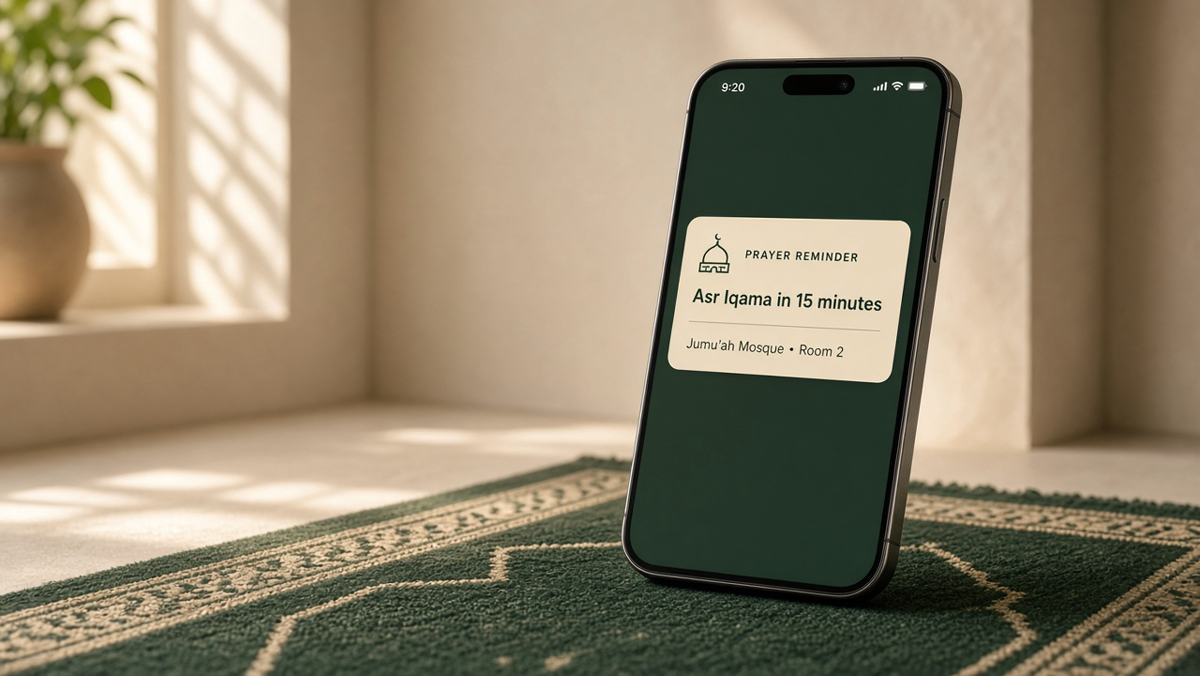
Most people who care about Jama’ah already set alarms.
The problem is not forgetting that prayer exists. The problem is arriving five minutes after Iqama because the phone followed a calculation — while the masjid followed its own schedule.
That gap is small on paper. In real life it is the difference between walking in calmly and whispering apologies at the back of the hall.
MyAlMasjid treats reminders as a community tool: they should track what your Imam or Mutawalli published, not what a worldwide formula guessed.
Why generic alarms quietly fail
Calculator apps are useful when you are travelling or between masjids. They are weaker when your whole week orbits one local congregation.
- Iqama often sits a fixed gap after Adhan — and that gap changes by prayer, season, or committee decision.
- Jummah times are local policy, not a sunrise equation.
- Ramadan, DST, and temporary hall changes land in chat first — then get forgotten in personal alarms.
If each member maintains their own clock, the committee ends up answering the same question every week: “What time is Maghrib Iqama today?”
What “smart” should mean here
Smart is not louder notifications. Smart is alignment.
In MyAlMasjid, prayer times are published for the masjid. Members who belong to that community can receive reminders tied to those times — a calm nudge before Adhan or Iqama, so people can leave work, wash, and arrive with dignity.
When the Mutawalli updates the schedule, members should not rebuild five personal alarms by hand. The source of truth moves once; the reminders follow.
A better rhythm for members
- Join your local masjid in the app after the committee is onboarded.
- See Adhan and Iqama the way your masjid publishes them.
- Keep reminders on so you get a gentle heads-up before Jama’ah.
- When times change, trust the published schedule — not a screenshot buried in WhatsApp.
Pair this with Live Azan when your Muezzin broadcasts, and the phone stops being a competing clock. It becomes a bridge to the hall.
What committees gain
Reminders are not only a member convenience. They reduce the operational tax on Mutawallis and admins:
- Fewer “what time?” messages after every schedule tweak
- Cleaner Fridays when Jummah times are published once
- Less friction for new members who do not yet know the house rhythm
Publish clearly. Remind gently. Let the hall stay the destination.
Reminders without replacing adab
A notification is a helper, not a fatwa and not a substitute for presence. The goal is simple: fewer people arriving late because their phone disagreed with the Imam’s board.
Keep the tone calm. Keep the source local. Keep the congregation first.
How masjids get onto MyAlMasjid
Committees do not self-create a masjid listing. MyAlMasjid Super Admin onboards your masjid after a short setup conversation. Then your Mutawalli or Admin publishes times, assigns roles, and invites members — including reminder-friendly schedules that stay in sync.
← All blog articles · When You Cannot Reach the Hall · Thursday Checklist: How Committees Can Make Jummah Calmer